


Here's the Difference Between Taxes and Customs

If Ballers are planning their first overseas trip, make sure you know what customs and excise are. You will encounter these terms when shopping for souvenirs to bring back to Indonesia. However, don't get confused with other terms like tax. Ballers should already know the difference between tax and customs to avoid confusion when traveling to various countries.
Although both are related to payments to the government, they actually have different roles and functions. Therefore, this time Ballers will be invited to understand the differences between the two more comprehensively.
Easy-to-understand information is already available so Ballers can gain new insights. Ready? Let's start the discussion now!
What is Tax?
Tax is a mandatory payment that must be made by citizens or parties operating in a country to the local government. These tax payments serve as a source of state revenue to finance government expenditures in providing various public services and infrastructure, such as education, health, transportation, and many more.
Taxes can be imposed on various types of income and transactions in a country. Examples include salaries, business profits, purchases of goods and services, and property purchases.
Taxes themselves are divided into several types, namely income tax (PPh) imposed on individual or corporate income, value-added tax (VAT) imposed on the sale of goods and services, as well as property tax and motor vehicle tax.
Each type of tax has different rates and regulations, depending on the laws and regulations of each country. It is important to remember that paying taxes is an obligation of every citizen or party operating in that country.
Read Also : Understanding What a Passport Is and Its Function
What are Customs and Excise?
"Bea" and "Cukai" are two different words. "Bea" refers to official state levies on individuals or entities engaged in international trade, both import and export. Meanwhile, "cukai" (excise) refers to official levies imposed by the state on goods with specific characteristics. Specific characteristics mean goods that, when used, can have a negative impact on the environment and the general public.
Therefore, customs and excise are forms of levies imposed by the central government on goods entering or leaving a country's territory. The purpose of implementing customs and excise is to control and supervise the flow of goods to ensure compliance with applicable regulations and laws.
Customs and excise are also implemented to protect local industries from low-priced foreign goods. This clearly maintains public safety and order for a better national life.
When traveling from abroad and bringing certain items, you may be asked to pay customs duties. Usually, items subject to customs duties include luxury goods such as cigarettes, alcoholic beverages, tobacco, and gasoline, or other high-value items.
The customs inspection process will be carried out directly at the entry or exit points of the country's territory, such as international airports, seaports, or border posts. The customs collection process begins with officers inspecting the baggage. If there are items subject to customs duties, you must pay them before entering or leaving a country's territory.
Read Also : 5 Types of Passports You Need to Know
7 Differences Between Tax and Customs & Excise
Through the definitions of tax and customs & excise explained above, do you now understand the difference between the two? It's okay if not, because there is easier-to-understand information available through the following points.
1. Nature of Payment
The first difference between tax and customs & excise lies in the nature of the payment. Tax is a mandatory payment that must be made by citizens or parties operating in a country periodically and regularly. For example, monthly or yearly, depending on the type of tax imposed.
Tax is also applied to various types of income and transactions, such as salaries, purchases of goods and services, and property ownership. Meanwhile, customs & excise has a situational nature, meaning payment only occurs when you bring certain goods into or out of a country.
Customs & excise payments are only imposed at certain times, depending on the type of goods brought and the laws and regulations applicable in that country. So, tax payment is regular, while customs & excise is situational and specific to certain goods only.
2. Purpose of Collection
Tax and customs & excise also differ in the purpose of collection. All tax revenues are collected to finance government expenditures in providing various public services so that the community gets better facilities.
The roads or public transportation you use can be proof that taxes are used properly. On the other hand, customs & excise aims to control and supervise the flow of goods to comply with applicable regulations and laws. In addition, customs & excise also functions to protect local industries from unhealthy competition with imported goods.
3. Types of Taxable Objects and Customs & Excise
The collection of taxes and customs & excise also differs in their objects. In taxes, the tax objects are very diverse depending on the type of tax imposed. This can be in the form of income, namely income tax (PPh) and transactions, namely value-added tax (PPN).
Each type of tax also has different rates and regulations, so the amount of tax payable cannot be equated.
Meanwhile, objects in customs & excise include goods entering or leaving a country's territory. The customs & excise rates to be paid are also not the same because they must refer to regulations regarding the type of goods and their country of origin.
4. Location of Collection
Furthermore, the location of tax and customs & excise collection is done differently. Tax payments are usually made by taxpayers to authorized government agencies, such as the Directorate General of Taxes or local tax offices.
The location of tax collection can vary depending on the type of tax and the applicable government jurisdiction. Then, customs & excise collection itself is carried out at the entry and exit points of the country's territory, such as international airports, seaports, and border posts.
Read Also : What is a Visa? Definition, Function and Difference from a Passport
5. Payment Frequency
It was previously mentioned that the collection times for tax and customs & excise differ. This is because one is done regularly, either monthly or annually, while the other is done only at certain times. For tax payments, the due date is within the fiscal year, which spans twelve consecutive months.
Do you still remember? For taxes, payments are made regularly depending on the type. For example, income tax that needs to be paid monthly according to existing regulations.
Then, customs & excise payments only occur when you bring certain goods and pass through the entry or exit points of the country's territory. Customs & excise payments are situational and are only imposed on goods that meet certain criteria.
6. Use of Funds
The last difference between tax and customs & excise lies in the aspect of how the funds collected from both payments are used. Funds collected from tax payments are used to finance various public programs and services managed by the government.
On the other hand, funds collected from customs & excise payments will be used to protect local industries from unhealthy competition with imported goods. In addition, funds from customs & excise can also be used for infrastructure development and other developments.
7. Taxable Goods and Customs Goods
Tax is usually not limited to objects, but also to ownership such as income from work or sales. Other things subject to tax include:
-
Gifts
-
Business profits
-
Profits
-
Interest
-
Dividends
-
Royalties
Then, it is different from goods subject to excise duty. According to Law No. 7 of 2021 concerning Harmonization of Tax Regulations, goods subject to excise duty include:
-
Ethanol or ethyl alcohol
-
Beverages containing ethyl alcohol
-
Tobacco products, such as cigars, cigarettes, sliced tobacco leaves, and other tobacco products whose manufacturing process does not comply with government recommendations.
After fully understanding the differences between tax and customs & excise, Ballers will surely be more prepared for planning an overseas trip. Read the explanation above again if Ballers are traveling so that regulations are still complied with for a problem-free trip related to taxes and customs & excise.

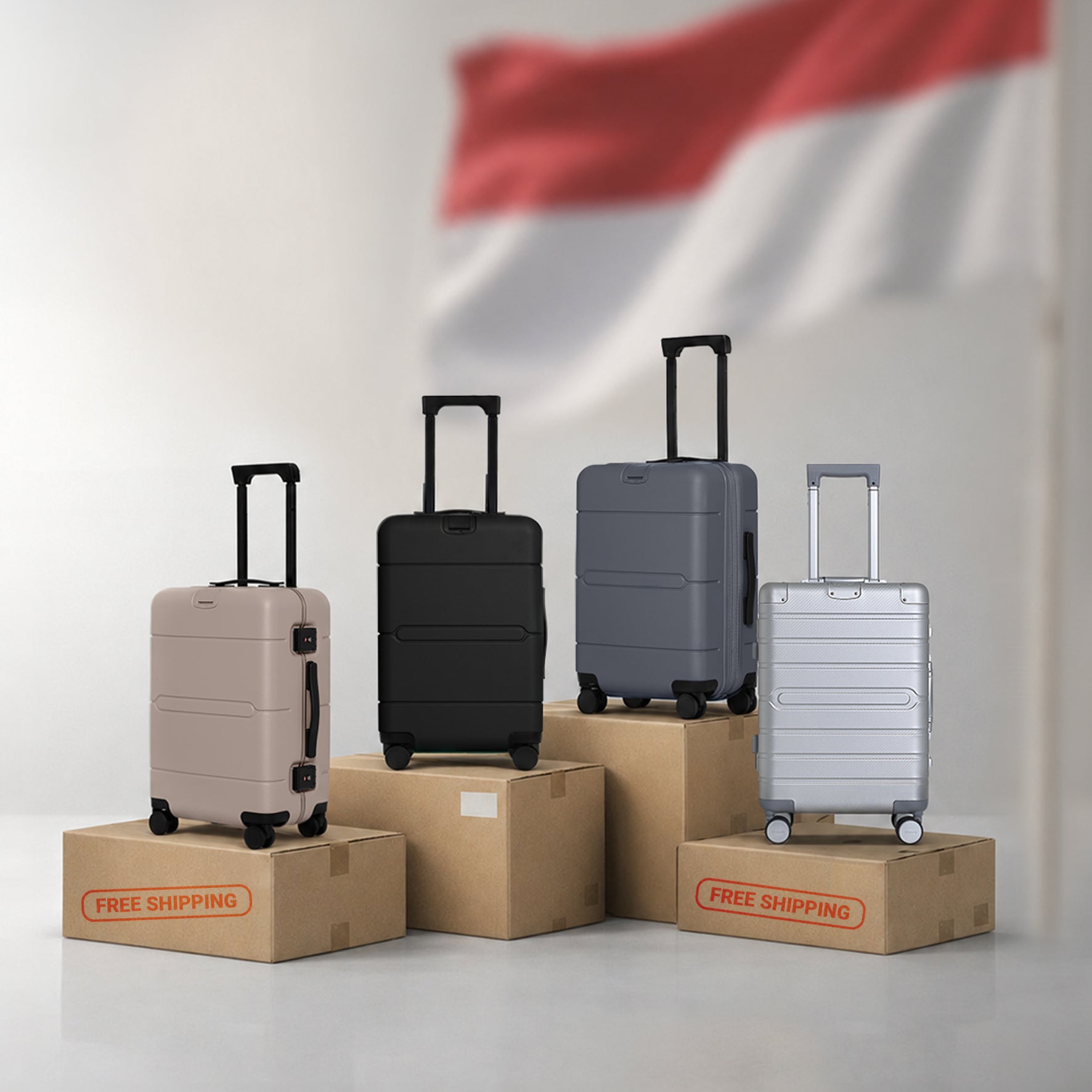
To ensure your journey is more comfortable and enjoyable, make sure Ballers already have the best suitcase. 28-inch Aluminum Suitcase of quality from Baller can be an option if you are looking for a suitcase with many compartments and high security.
This is because Baller suitcases are equipped with two TSA locks to ensure the security of your belongings throughout the journey. The wheels are also strong and can rotate 360 degrees to make it easy when you push it.
With its large capacity and trendy design, Baller suitcases will be your loyal companion wherever you go. Go ahead and order the Baller suitcase you need now!